
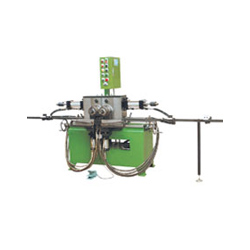
FRAME TUBE BENDING JA-05C
Model:JA-05C
Add to inquiry
Product Specifications
| Model | JA-05C |
|---|---|
| POWER | 3HP |
| ENERGY | HYDRAULIC |
| AUXILIARY ENERGY | |
| CAPACITY | 300~360 UNITS/HR |
| EXTERNAL DIMENSION | 150X75X175CM |
| WEIGHT | 750KGS |
| APPLICATION | O12.7~ O38.1 R250 |
Detail
Applications in Bicycle Frame Manufacturing
1. Tube Diameters, Radius and Materials
The application window of the JA-05C reflects common bicycle frame tube dimensions:
- Approximate tube diameter range: Ø12.7–Ø38.1 mm
- Reference bending radius: around R250 (actual usable radius depends on tooling and design)
Typical materials are:
- Carbon steel frame tubes
- Alloy steel tubes
- Stainless steel and aluminum tubes, where wall thickness and design are suitable for bending
For each project, tube drawings and material data are reviewed to confirm feasible bending radius and angle so that structural requirements and visual expectations are met.
Key Features for Engineering and Production Teams
1. Output and Line Balancing
The JA-05C offers an output range of roughly 300–360 units per hour under typical frame tubing conditions. Actual productivity will depend on:
- Tube length and diameter
- Number of bends per tube and required angles
- Handling method and experience of the operator
- Layout of the workstation and nearby equipment
These figures provide a starting point for line balancing when planning how many cutting, bending and welding stations are needed for a given production target.
2. Compact Layout for Frame Workshops
With dimensions around 150 x 75 x 175 cm and a weight of about 750 kg, the JA-05C occupies a moderate footprint. This supports:
- Placement near tube cutting machines and frame welding jigs
- Use as a shared bending station for several frame models
- Integration into both new lines and existing workshops where space must be used efficiently
The structure is designed so that access points for maintenance and setup are reachable without complex disassembly.
Integration with Bicycle Frame Production Lines
1. Position within the Process Flow
The JA-05C is usually placed after cutting and before welding operations in a frame line. Common process sequences include:
- Tube cutting and marking
- Bending on the JA-05C according to frame geometry
- Punching or drilling where required
- Tack welding and full welding in frame jigs
- Alignment, grinding and surface preparation
Short handling distances between cutting, bending and welding help simplify logistics and reduce tube damage from unnecessary movement.
Contact and Inquiry Information
At Jui Chih, as a tube bending equipment supplier, we work closely with our customers to evaluate how the JA-05C fits into a new or existing frame production line. To do that effectively, we usually ask you to share:
- Tube outer diameter, wall thickness, and material for each frame position
- Target bending radius and angles based on your frame drawings
- Planned monthly or yearly production volume for each model
- Current or planned line layout, including the preferred location for the bending station
With this information, we can review feasibility, suggest suitable tooling concepts, and outline the expected machine performance based on your actual production needs.
FAQ
1. What types of bicycle frames can be produced with the JA-05C?
The JA-05C can be used for many frame categories, such as city bikes, trekking bikes, MTBs, BMX frames and selected e-bike frames, as long as tube sizes fall within the approximate Ø12.7–Ø38.1 mm range and the bending radius requirements can be met. Frame drawings are reviewed to confirm how each tube can be processed.
2. How do tube diameter and material affect bending on this machine?
Tube diameter, wall thickness and material grade all influence bending behaviour. For example, thinner walls or harder materials may require specific bending radii and parameter settings to keep flattening and surface marks under control.
3. Can one JA-05C handle multiple frame models?
Yes. With appropriate tooling and documented settings, one JA-05C can be used for several frame models. Model changes involve swapping tooling when necessary, adjusting stops and angle settings, and verifying that sample tubes match drawings. The time required for changeover depends on how many adjustments are needed between models.