
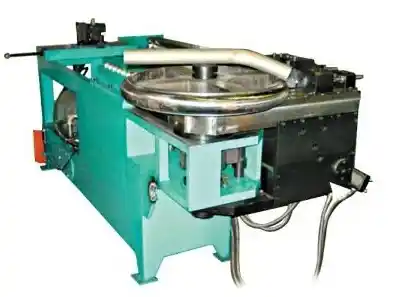
FRAME TUBE BENDING (BIG DIA)
Model:JA-05H
Add to inquiry
Product Specifications
| Model | JA-05H |
|---|---|
| POWER | 7.5HP |
| ENERGY | HYDRAULIC |
| AUXILIARY ENERGY | |
| CAPACITY | 300~360 UNITS/HR |
| EXTERNAL DIMENSION | 230X100X110CM |
| WEIGHT | 1800KGS |
| APPLICATION | Ø25.4~ Ø70 R400 |
Detail
Applications and Typical Use Cases
1. Bicycle and E-Bike Frame Tubes
The JA-05H covers the larger tube range often used in:
- E-bike frames that require higher stiffness and larger tube diameters
- Cargo and utility bike frames with reinforced main triangles and carriers
- City and trekking bikes where oversize tubes are used for design and strength
- Special frames that use large-diameter tubes for visual impact or load capacity
Within its diameter window and bending radius reference, the machine helps shape top tubes, down tubes, seat tubes and rear triangle members when larger tube sections are specified.
2. Extended Use for Other Large Tubes
Beyond bicycle frames, the JA-05H can be used for other products that require curved large-diameter tubes, for example:
- Structures for furniture and display stands
- Frames and supports in fitness equipment
- Selected motorcycle, automotive or general structural tubes within the size range
For each application, tube drawings and bending requirements are checked so that geometry and surface appearance can be achieved within practical limits.
Key Features for Engineering and Production Teams
1. 7.5 HP Hydraulic Drive for Heavy Bending Tasks
A 7.5 HP power unit and hydraulic drive give the JA-05H enough bending force for demanding tube sections. For production teams, this means:
- Support for thicker walls or higher-strength tube materials within the design range
- Stable bending force across repeated cycles for consistent geometry
- Adjustable hydraulic parameters to match different tube types and bending conditions
This is particularly useful when moving from prototype work to large-batch production of heavy-duty frames or structures.
Integration into Production Lines
1. Position in the Process Chain
The JA-05H is normally placed after cutting and before welding or assembly stages. A typical process chain might include:
- Tube cutting and marking for length and reference points
- Bending on the JA-05H according to design geometry
- Hole punching, trimming or end preparation where needed
- Welding in fixtures or jigs, followed by inspection and finishing
Keeping the bending station close to cutting and welding helps minimize damage from unnecessary handling and simplifies material flow.
Manufacturing Experience and Support
At Jui Chih, as a tube bending machine supplier, we produce the JA-05H based on our long experience in building tube processing equipment. This background allows us to:
- Work with frame and structural tube sizes similar to those used on this machine
- Understand common bending issues such as flattening, wrinkling, and springback
- Prepare machines for export and support different market requirements
As a tube bending machine supplier, we carry out assembly checks, motion tests, and hydraulic system verification on each machine. We can also perform sample bending with representative tubes to confirm machine behavior before shipment.
FAQ – JA-05H
1. How does tube material affect bending on this machine?
Material grade and wall thickness strongly affect bending behaviour. Harder materials or very thin walls may require specific radii, support methods and parameter settings to keep flattening and surface marks under control. The machine’s hydraulic system and tooling options allow parameters to be tuned within defined limits for each material.
2. Can one JA-05H be used for several product families?
One JA-05H can be used for many products as long as they fall within the diameter and radius range. When moving between different frames or structures, operators change tooling where required, adjust stops and update bending parameters. The time needed for changeover depends on how many settings differ between products and how well procedures are documented.